Eleni's Greek Kitchen · a hill village on Ikaria
They come to my island for the secret. There is a hillside, and there is work.
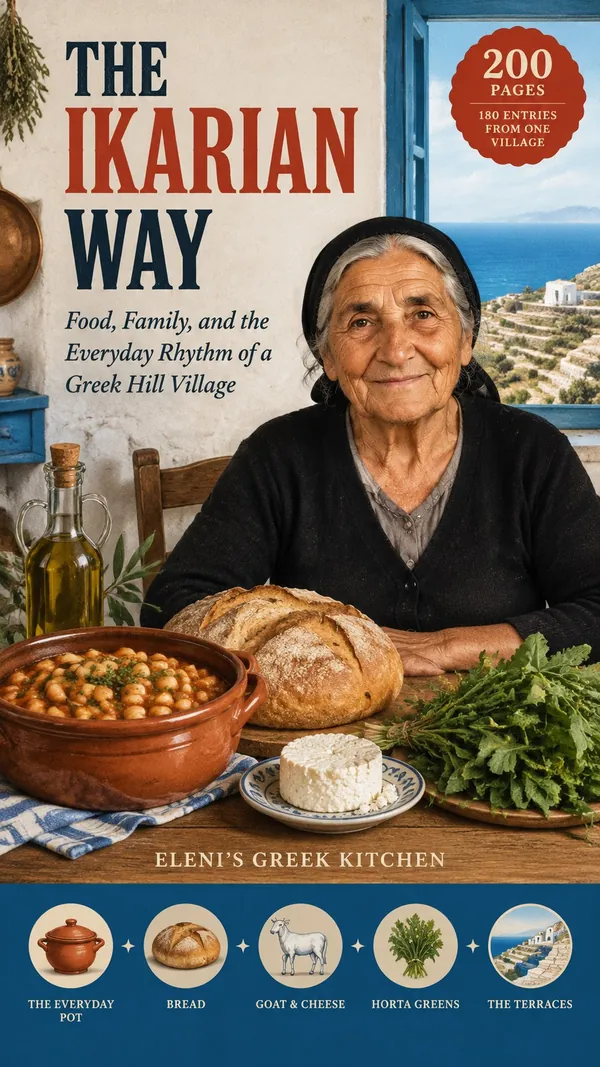
I am Eleni Stamati. What I have is one hundred and eighty entries on the beans, the bread, the wild greens, the terraces and the village, written down as they were actually done.
The book is $9.99. The 30-Day Challenge is free. 7-day refund.
A free challenge and chapter
Get the free 30-Day Ikarian Kitchen Challenge and chapter one
Put your email in the box and two things open on the very next page, both free: the whole 30-Day Ikarian Kitchen Challenge, and Chapter 1, The Everyday Pot. Thirty days in a hill village kitchen on Ikaria, one plain thing each day. There is nothing to install and no card to enter.
“We did not eat beans because we were poor. We were poor, and so we learned to cook beans very well.”
Eleni Stamati
Everyone who has heard of my island expects the same things. This book gives none of them.
Below is exactly what people usually come looking for, and what they get instead. I would rather lose the sale than promise you the column on the left. Nothing on this page is a promise about your health, your weight or how long you will live.
A food or two that add years to your lifeNo such food exists. The real meals an Ikarian hill family actually lived on. Chapters 1 to 4 · 60 entriesA strict diet or eating plan to followNo plan was ever followed. A whole year of growing and gathering it yourself. Chapters 5 and 6 · 30 entriesOne secret ingredient nobody else knowsThere was never just one. Family, village and the daily rhythm, in full. Chapters 7 to 9 · 45 entriesA doctor explaining the scienceEleni is not a doctor. Her own belief, always named plainly as belief. Every chapter, marked as opinionThe words “Blue Zone” on the coverSomeone else's brand name. The real place, and what actually happened there. Chapters 10 to 12 · 45 entries
$9.99. Once. The hillside grows the same greens it always did.
Get the Book · $9.99This book makes no claim about your health, your weight or how long you will live. It describes one household's way of life in one place. What you take from it is yours to decide.
The free half of the plate.
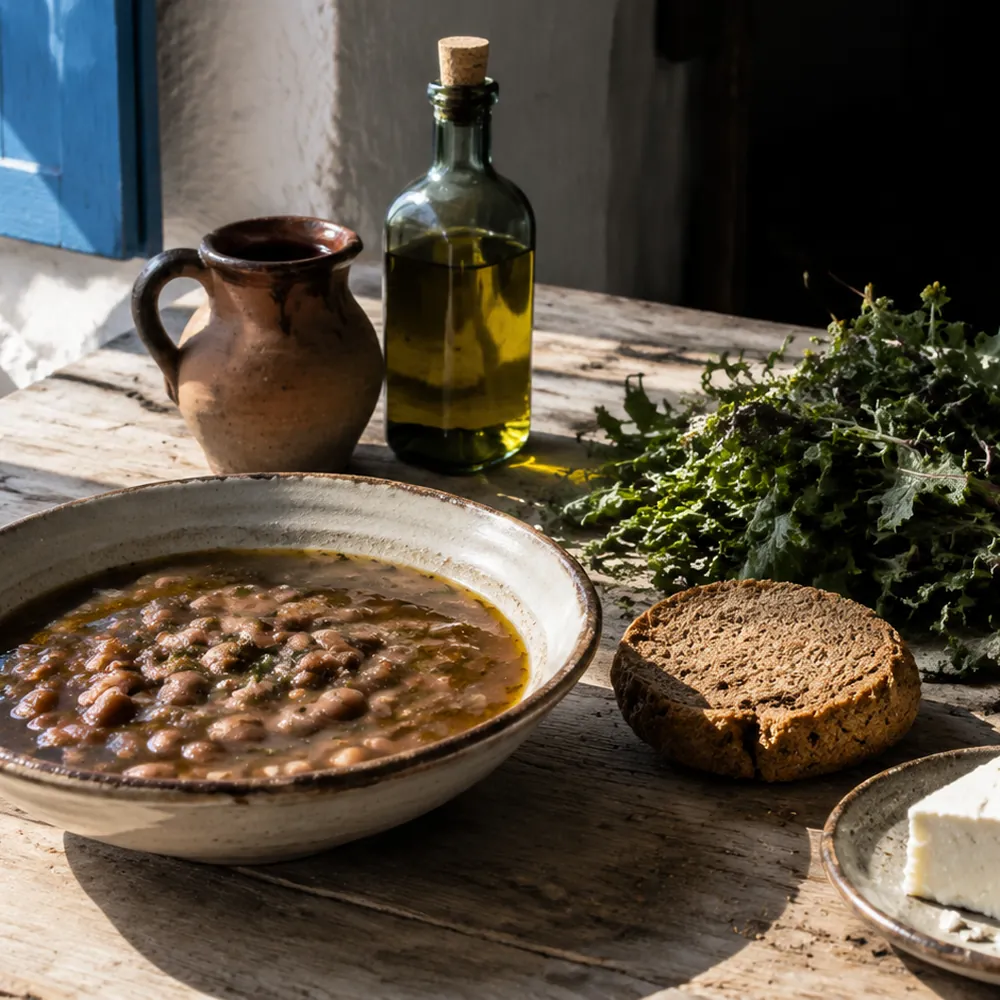
Beans from the pot on one side. On the other, whatever the hillside gave that week, cut so it would come again. Oil and lemon, and nothing else, and the oil went on raw at the end. You do not have to gather any of it. The book gives a green you can buy for each: dandelion greens for radikia, callaloo for vlita, the fronds on a fennel bulb for wild fennel.
- Vlita
- Radikia
- Wild fennel
- Nettles
- Wild asparagus
- Myroni
- Sorrel
- Mallow
In the book: Chapter 1, The Everyday Pot · Chapter 6, Horta, and the Free Half of the Plate
12 chapters, 180 entries, 200 pages.
Every entry is one page. The old way, in her own words. Then how you might bring a little of it into your own home today. Then one line worth remembering, and a photograph, because a description of an old pantry is worth far less than a picture of one.
You do not need to read it start to finish. Open it wherever your own life needs it that week.
1The Everyday Pot15 entries
- Fasolada, the Pot of Most Days
- Black-Eyed Peas with Wild Fennel
- Chickpeas Left in a Slow Oven
- Fava, the Yellow Purée
- Lentils, and the Vinegar at the End
- Soufiko, the Summer Pan
- Ladera, Cooked in Oil and Left to Cool
- The Oil Poured In Raw at the End
- Lemon Instead of the Meat
- Gigantes, the Big Beans for a Sunday
- Chickpea Patties from Yesterday’s Pot
- The Pot That Fed Twice
- Wild Fennel, in Almost Everything
- Salt, and the Sea Below Us
- The Table Without Meat On It
2Bread, and the Two Days It Took15 entries
- The Starter Kept Alive on the Shelf
- The Two Days a Loaf Wanted
- The Village Oven and Baking Day
- Barley, the Grain of a Dry Island
- Paximadi, the Rusk That Kept Forever
- Wetting the Rusk Under the Tap
- One Baking for the Whole Week
- The Watermill in the Ravine
- The Crust Nobody Threw Away
- Pitarakia, the Little Greens Pies
- The Pumpkin Pie That Was Not Sweet
- Rolling the Sheets by Hand
- Trahana, Made in Summer for February
- The Loaf Made Only for the Feast
- Bread and Oil, the Child’s Afternoon
3The Goat, the Milk and the Little Cheese15 entries
- The Goats Out on the Rock
- Milking, Morning and Evening
- Kathoura, the Fresh White Cheese
- The Whey That Came After
- Cheese Kept in Brine for Winter
- Yogurt Set in a Clay Bowl
- The Rennet and the Cloth
- Cheese Under Oil in a Jar
- Meat Only When the Feast Came
- The Goat Stuffed with Rice and Herbs
- The Bones Went Into the Pot
- The Kid, and the Hard Decision
- Milk in the Cup, Not the Glass
- The Cheese Pie Made from Scraps
- What One Goat Gave in a Year
4Small Joys: The Sweet, the Wine and the Long Sit15 entries
- Honey from the Hillside Hives
- The Fig, Dried on a Reed Tray
- The Spoon Sweet for the Visitor
- The Wine in the Cellar
- Treading the Grapes with Bare Feet
- The Small Glass, Never the Bottle
- What Was Made from the Last of the Grapes
- Coffee in the Little Copper Pot
- The Kafeneio and the Long Sit
- The Tea We Drank in the Evening
- Gathering and Drying the Herbs
- Almonds and Walnuts at the End of a Meal
- Rice Pudding on a Feast Day
- Honey Fritters at the Panigiri
- The Sweet That Was Kept for Others
5The Terraces Through the Year15 entries
- The Pezoules, Steps Cut Into a Hill
- The Dry Stone Wall and Who Built It
- Broad Beans Sown in Autumn
- The Water Problem on a Dry Island
- The Spring Bed of Greens
- Onions, Garlic and the Braid on the Wall
- The Tomatoes That All Came at Once
- The Aubergine and Courgette Bed
- The Autumn Row for Winter
- Ash, Manure and What Fed the Soil
- The Vine Along the Terrace Edge
- The Fig Tree Nobody Watered
- Seed Saved in a Twist of Paper
- The Garden You Walked Past Every Day
- What the Terrace Gave, Month by Month
6Horta, and the Free Half of the Plate15 entries
- What Horta Actually Means
- Vlita, the Summer Amaranth
- Radikia, the Bitter Chicory
- Wild Fennel Along the Path
- Nettles, and How to Handle Them
- Wild Asparagus in the First Warm Weeks
- Myroni, the One That Made the Pie
- Sorrel, Mustard and the Sharp Ones
- Mallow, the Soft One for Hard Times
- Cutting So It Comes Again
- Boiling, and the Water After
- Oil and Lemon, and Nothing Else
- Greens Stirred Through the Beans
- The Greens That Went Into a Pie
- Where You Never Gathered
7The House and the People In It15 entries
- Three Generations Under One Roof
- The One Room That Was Warm
- The Table in the Middle of Everything
- What the Grandmother Did
- Children Underfoot and Useful
- Marriage and the Neighbouring Field
- The Ones Who Went to America
- What Came Back in the Parcel
- The Women in Black
- Nobody Ate Alone
- The Argument, and the Making Up
- Sunday, and Who Came
- The Old Ones Never Moved Out
- Where Everybody Slept
- The Door That Stood Open
8The Village, the Square and Belonging15 entries
- Houses Scattered, Not Gathered
- The Houses Hidden in the Rocks
- The Church and the Chapels on the Hill
- Your Name Day, Not Your Birthday
- The Priest Who Farmed His Own Field
- The Kafeneio as the Village Office
- The Shops That Opened After Dark
- Borrowing Without Counting
- The Work Everybody Turned Out For
- Gossip, and What It Was Actually For
- Helping at the Harvest of Somebody Else
- The Newcomer and the Long Test
- The Funeral the Whole Village Came To
- The Walk to Somebody Else’s House
- Nobody Went Missing Unnoticed
9The Ikarian Clock15 entries
- Waking Without an Alarm
- The Late and Serious Breakfast
- The Cool Hours Were the Working Hours
- The Big Meal at Midday
- The Afternoon When the Village Stopped
- The Evening That Started at Nine
- What Six O’Clock Meant
- Walking, Because There Was No Other Way
- The Errand That Took Two Hours
- Dark That Was Actually Dark
- The Long Night’s Talking
- No Word for Being Behind
- The Week Without a Weekend
- What Was Not in the Kitchen
- Hurry Came With the Visitors
10The Turning Year and the Panigiri15 entries
- The Panigiri, the Village Saint’s Day
- Cooking for Four Hundred
- Everybody Pays and Nobody Profits
- The Dance That Goes Round
- Children Still Up at Two in the Morning
- The Long Fasts of the Church Year
- Clean Monday and the Table That Went With It
- Easter, the Fire and the Whole Animal
- The August Feast in the Heat
- The Grape Harvest
- The Olive Harvest in the Cold
- Carnival Before the Fast
- Christmas and the Bread with a Cross
- New Year and the Coin in the Cake
- The Reason for the Whole Calendar
11Work, Craft and the Hands15 entries
- Building the Wall That Holds the Hill
- The Charcoal Burner on the Hillside
- The Barrel and the Cooper
- The Loom in the Corner
- Spinning, Always Spinning
- Baskets from What Grew by the Water
- The Word for Throwing Away
- Whitewashing Every Spring
- Carrying the Water
- The Mule That Did the Heavy Work
- The Hives Behind the House
- Soap from the Last of the Oil
- Keeping the Tools
- The Hands That Told You a Life
- Nothing Was Made to Be Admired
12Growing Old Without Stopping15 entries
- There Was No Retirement
- The Old Man Still on the Terrace
- The Grandmother Who Ran the Kitchen
- Less of the Heavy, More of the Wise
- Wanted at the Feast
- Teaching the Grandchild
- Walking Because There Was No Other Way
- The Same Chair, Every Afternoon
- Nobody Was Sent Away
- The Ones Who Came Home
- Death Talked About Plainly
- The Long Remembering
- Useful to the Last Week
- What the Old Ones Complained About
- A Reason to Get Up
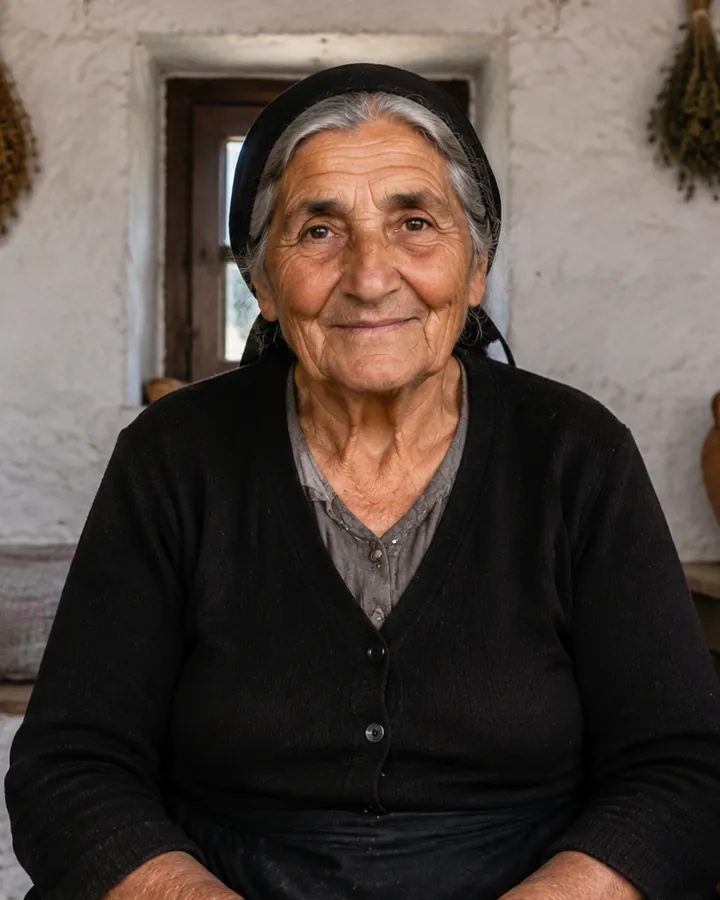
“I will not sell you a cure. I will tell you what grew on my hill.”
I was born in a village in the interior of Ikaria, up where the road gives out and the hillside starts. What the tavernas down at the water serve is not what we ate.
People come now and ask what the trick was. There was no trick. There was a poor, dry island, a great deal of walking, beans that had to carry a winter, and a hillside that gave up half our plate for free if you knew where to look.
So that is what is in here. The two-day bread, the bean pot, the goat, the terraces, and the greens I have been cutting off that hill since I was six years old. I have my own opinions about why we did well on it, and I say so plainly as opinions.
The deal this book makes with you.
Read it in any order. The hillside chapters are where I would start.
Read it for a week. If it is not for you, I do not want your money.
Read it for seven days. If it has not given you something worth keeping, write to me at hello@elenisbooks.com and I will refund every cent, no questions. Pay once and it is yours to keep, on your phone, your tablet, or printed at your own kitchen table.
It is a book to dip into, not to finish in one sitting. 12 chapters, each one a different part of the same life.
7-day refund · emailed instantly · PDF and EPUB · yours forever
Visa · Mastercard · PayPal · Apple Pay · delivered by email the moment you buy
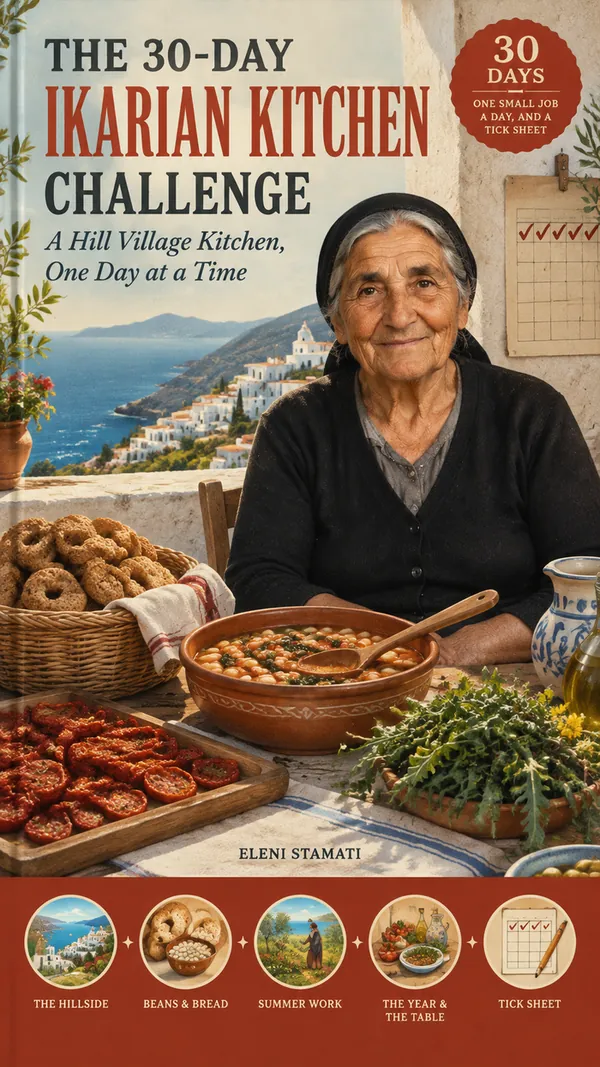
The 30-Day Ikarian Kitchen Challenge
Thirty days in a hill village kitchen on Ikaria. The greens, the beans and the bread, the summer work and the year, one plain thing each day.
- Week one: the hillside and a garden on a dry island
- Week two: the beans and the bread, from fasolada to rusks
- Week three: the summer work that fed the winter
- Week four: the year and the table, writing it down, and a day cooking with somebody younger
The two days I would not skip are the fasolada on day ten and writing it down on day twenty-eight.
The challenge is free. The Ikarian Way is $9.99.
Questions people ask
Is this a diet book?
No. It is a description of a way of living, food included. It makes no promise about your own health, your weight or how long you will live.
Is there medical or financial advice in it?
None, deliberately. Eleni is not a doctor, a nutritionist or a financial adviser. Where she shares her own belief about why something worked, the book marks it plainly as her opinion, never as guidance.
Is the famous Ikarian herb tea in the book?
It is, described exactly as what people gathered, dried and drank, and nothing more. This book will not tell you that a herb does anything to your body, because I am not able to tell you that and I will not pretend otherwise. In these pages a herb is a plant and a flavour.
Is any of this historically accurate?
The food and customs described are real, checked against the historical and cultural record. Eleni tells it in her own voice, the way a grandmother would tell it at her own table.
Why doesn't the book use the words “Blue Zone”?
Because that name belongs to someone else's brand. This book describes the actual place and the actual household instead of borrowing someone else's label.
What do I get, and is it a subscription?
Two files, emailed the moment you buy: a 200-page PDF for reading or printing at home, and an EPUB for Kindle and e-readers so you can set your own type size. You pay once. Nothing renews.
Can I get it on paper?
Not as a printed book. It is a digital book you can print yourself, which is what keeps it at $9.99 instead of what a 200-page illustrated hardback would cost.
There was never a secret on this hill. Only what grew wild on it, and who you ate it with.
12 chapters on the beans, the bread, the goat, the terraces, the wild greens and the turning year of an Ikarian hill village. 200 pages, 180 entries, a photograph on nearly every one. $9.99, once.
7-day refund · emailed instantly · PDF and EPUB · or read one chapter first, free